Meg Jones was Wisconsin’s storyteller.
She took readers from water-soaked cranberry farms to dusty roads in Afghanistan, from the stables of the State Fair to the star-filled cosmos.
Now, her legacy will continue with the Meg Jones Scholarship Fund.
The scholarship will be awarded to University of Wisconsin-Madison journalism students from Wisconsin. The fund is administered through the MPC Endowment, a 501(c)(3) nonprofit foundation affiliated with the Milwaukee Press Club.
The scholarship committee has set an ambitious goal of raising $50,000, and is thankful for the generosity of the fund’s leadership sponsors, the Milwaukee Newspaper Guild and the Gannett Foundation.

Jones, a Wisconsin native, earned degrees in journalism and history from UW-Madison where she immersed herself in campus life, rowing with the crew team and playing drums in the marching band.
During her career, she was known for bringing care and curiosity to every assignment. She spent two decades reporting for the Milwaukee Sentinel and then the Milwaukee Journal Sentinel. Jones died in December 2020 from complications of pancreatic cancer. She was 58.
Just as no story was too big or too small for her, no contribution to this fund is too big or too small. We appreciate your help as we honor her and support the next generation of journalists.

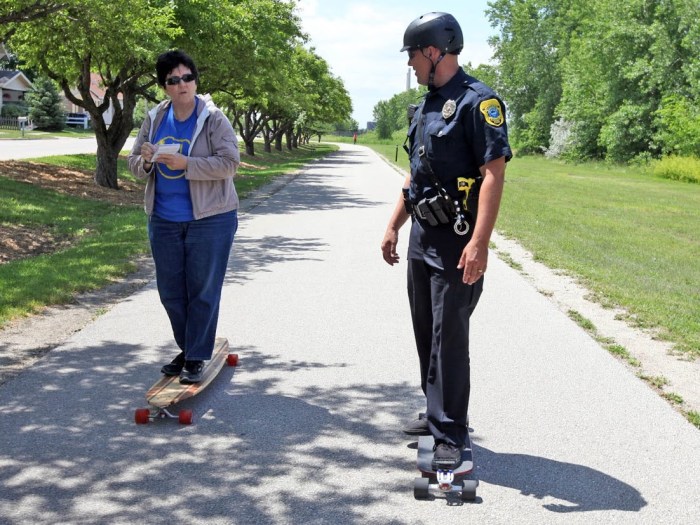
Meg Jones on assignment in Green Bay. | Courtesy Milwaukee Journal Sentinel 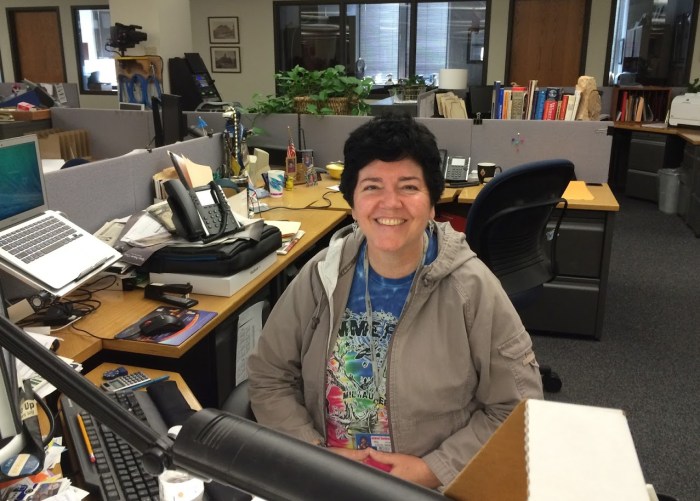
Meg Jones is seen at work. | Courtesy Milwaukee Journal Sentinel 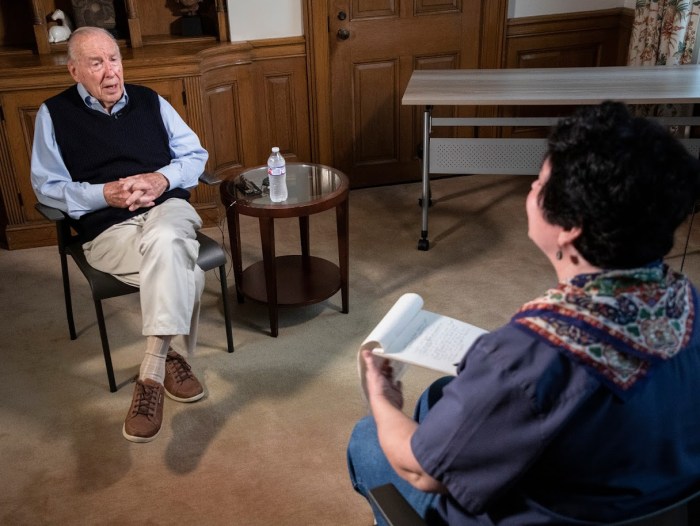
Meg Jones interviews Capt. Jim Lovell. | Courtesy Milwaukee Journal Sentinel 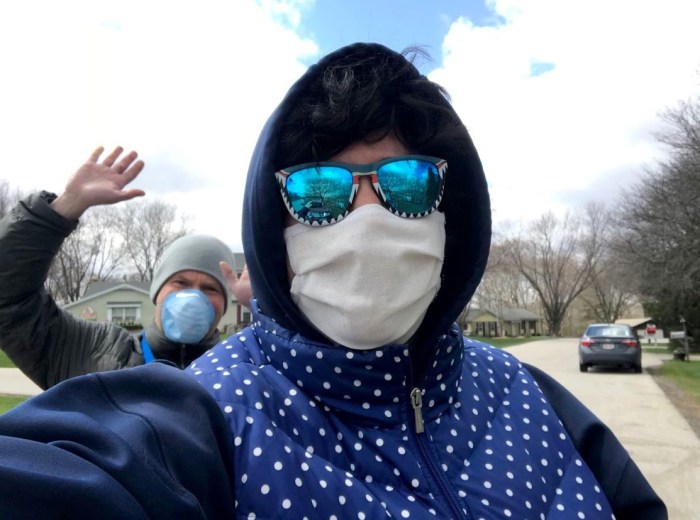
Meg Jones reporting during COVID-19. | Courtesy Milwaukee Journal Sentinel 
Meg Jones staff photo | Courtesy Milwaukee Journal Sentinel 
Meg Jones rides in a F18 hornet. 
Meg Jones interviews while biking. | Courtesy Milwaukee Journal Sentinel 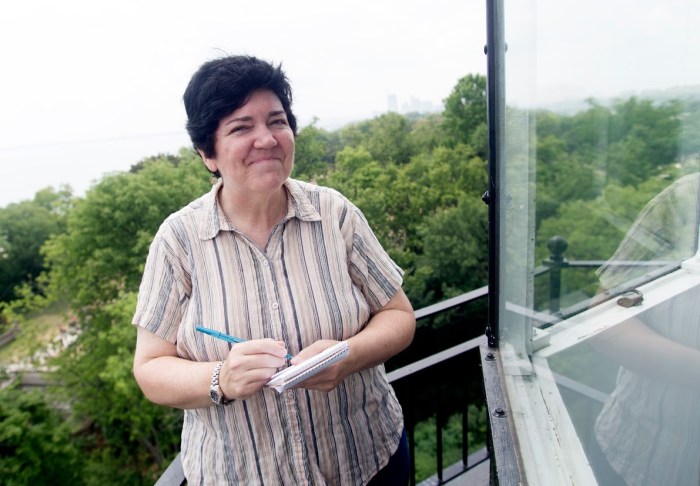
Meg Jones reports from the top of a lighthouse. | Courtesy Milwaukee Journal Sentinel 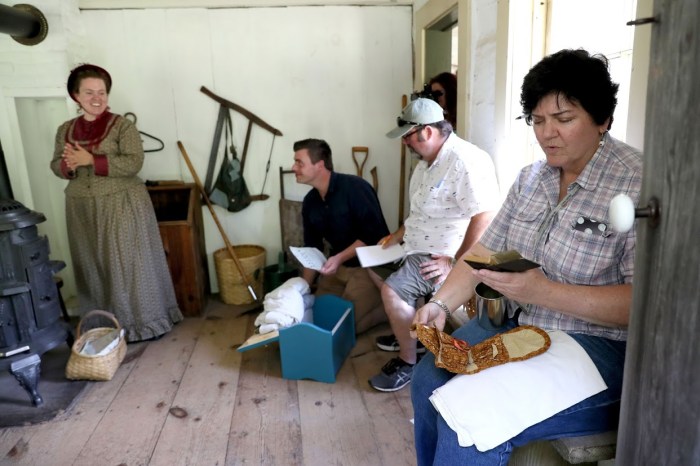
Meg Jones reports from Old World Wisconsin. | Courtesy Milwaukee Journal Sentinel 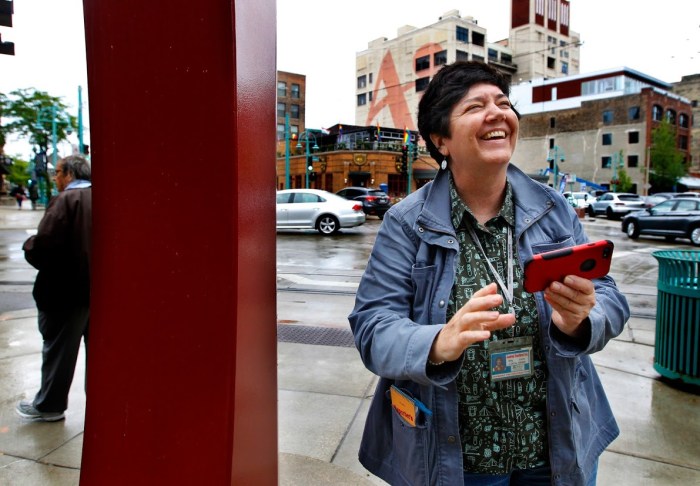
Meg Jones wins the newspaper’s Amazing Race. | Courtesy Milwaukee Journal Sentinel 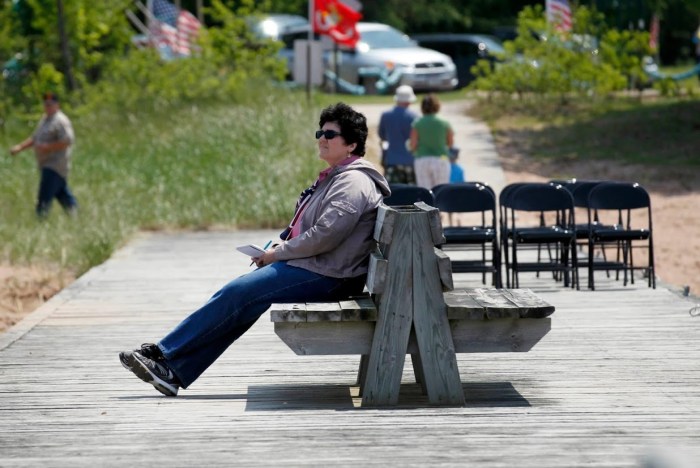
Meg Jones on assignment. | Courtesy Milwaukee Journal Sentinel 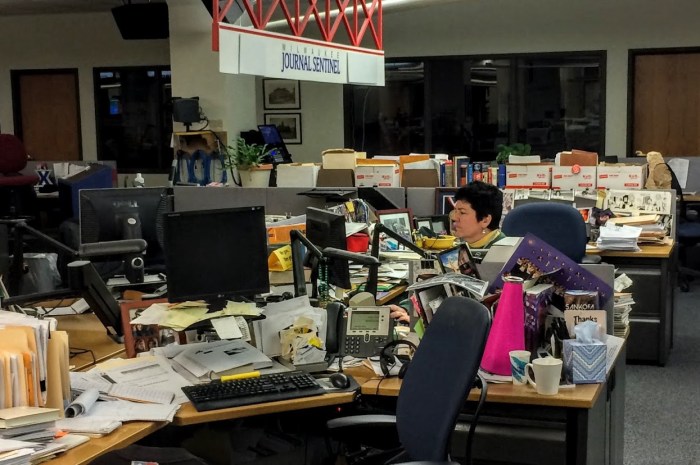
Meg Jones at work. | Courtesy Milwaukee Journal Sentinel 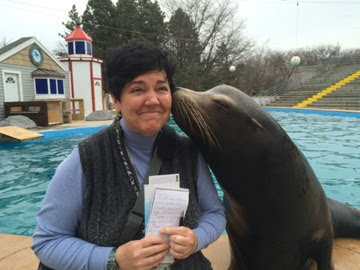
Meg Jones reporting from the zoo. | Courtesy Milwaukee Journal Sentinel 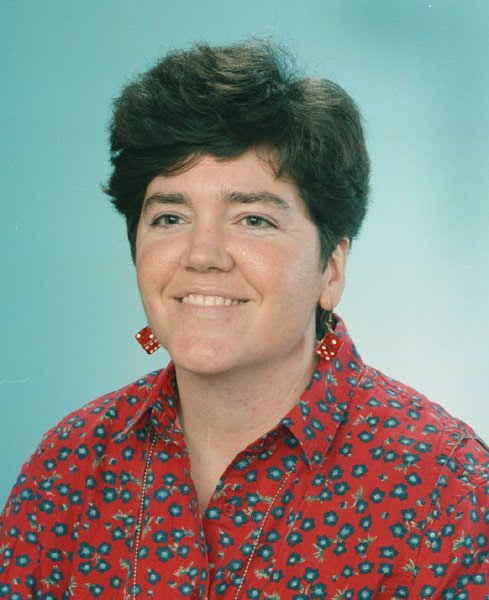
Meg Jones staff photo. | Courtesy Milwaukee Journal Sentinel
scholarship winner
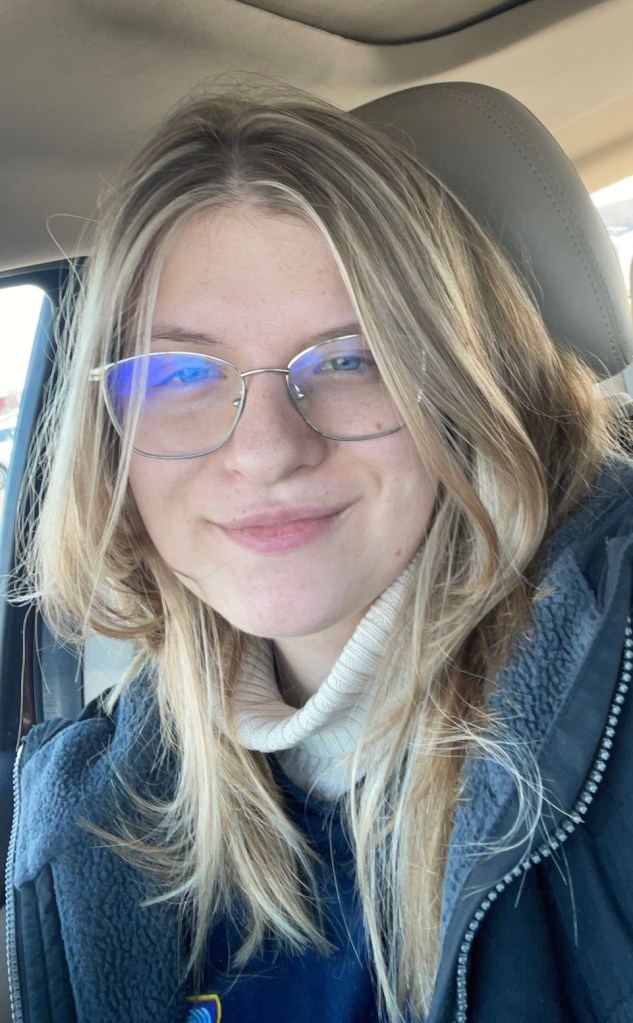
As Kodie Engst began her senior year in high school and started searching for colleges to attend, the University of Wisconsin-Madison wasn’t really on her list—until her cousin got married.
“She met her husband at UW, so they elected to have their wedding here in Madison,” Kodie said. “My family came to town early and decided to take a tour of the campus, and I absolutely fell in love. Suddenly, I couldn’t get Madison out of my mind, and the more research I did about the culture and the classes offered, the more I knew I had to go to Madison.”
Kodie, a journalism and political science major at UW-Madison who is on track to graduate in May 2024, has been named the first recipient of the Meg Jones Scholarship Fund grant. The $1,500 award will be a big help to Kodie, who is financing her own way through college.
Jones, a Wisconsin native, earned degrees in journalism and history from UW-Madison, where she immersed herself in campus life, rowing with the crew team and playing drums in the marching band.
During her journalism career, she was known for bringing care and curiosity to every assignment. She spent two decades reporting for the Milwaukee Sentinel and the Milwaukee Journal Sentinel. She died in December 2020 from complications of pancreatic cancer. She was 58.
A committee of her peers created the Meg Jones Scholarship Fund, which has raised $30,000. The fund will provide a $1,500 scholarship annually to a qualified UW-Madison journalism student.
Kodie recently did an online interview with the Meg Jones Fund committee to talk about her college experience and what she hopes to do after graduation.
Q. What was it that made you decide to be a journalist?
I’ve always wanted to be a journalist, even as a little kid. But growing up, I got more and more cynical about the profession as my choice. When I entered UW as a freshman, I was only a political science major, and I had no idea what I wanted to do. But my sophomore year, as things started to open back up inch by inch as Madison struggled to recover from COVID, I joined The Daily Cardinal because something in the back of my mind reminded me that I had always loved to write and research, and follow the news. Once I started participating in the paper by writing and copy-editing, I saw my peers bringing journalism to life before my eyes, and that re-ignited my love for it. After joining The Cardinal, it was only a matter of time before I declared a journalism major.
Q. How long have you been a staff member of The Daily Cardinal, and why did you join the publication?
I started my sophomore year of college, so I’ve been with The Cardinal for five semesters. I joined because I loved the idea of writing for the newspaper and having a hand in the way our campus community consumed news.
Q. What is campus life like at UW-Madison? Do you have any hobbies outside of school work?
There are so many students that the campus is never particularly quiet. Trying to find a place to study can sometimes feel like a herculean task, but I love it. The city and the students all have so much life that you can’t help but let yourself be energized by the sheer vividness of it. There’s a real culture of support, especially in the J-School, because everyone knows how difficult it is to get there. Outside of school, and when I’m not at work, I like to run, and I’ve just taken up yoga. I also love to read. I’ll read anything, but I usually prefer high fantasy, similar to Priory of the Orange Tree, which is my favorite book at the moment.
Q. After graduation, what would be your ideal job?
Obviously, I would love to continue having the privilege of reporting and continuing to be a journalist after graduation. With my major in political science, being a political reporter would be a dream, but I also reported on COVID my sophomore year and loved health-focused reporting. As long as I’m helping keep the public informed, or making them think about an old topic in a new way, I’d be happy.
Q. Growing up in Minnesota, did you write for your high school student newspaper, or did any of your classes inspire you to become a journalist?
Unfortunately, my high school did not have a newspaper. I took a writing class my senior year, though, where we had to write an ethnography. The art of ethnography is not quite the same as journalism, but I was able to conduct interviews and do research, and that may have begun my curiosity in what journalism could be for me.
Q. You wrote in a letter to the Milwaukee Press Club that one of your passions is community-focused reporting. Why is that so important to you?
I believe deeply that the basic requirement for an effective democracy is an informed populace. In one of my journalism classes, we talked extensively about news deserts in America, and especially small-town America. Additionally, I think sense of community is extremely important to foster compassion among people. Then, in J335, we got the chance to cover an event in the Madison community, but outside of the university. It opened my eyes to the possibility that locally sourced and focused reporting could be the gateway to healing skepticism of journalism that’s been on the rise, and opening opportunities to start to bridge the gap in news deserts. Community-focused reporting can also be something to show the facets of a community to be proud of, and can give the opportunity for people to develop a stronger sense empathy for those around them in their communities.
Q. You are paying for room, board and tuition on your own. Explain the hurdles you have to deal with when trying to make this work.
In short, it means that I work a lot, both during breaks and during school. The long story is that I have relied on scholarships and loans to pay for school. The reality of student loan debt after I graduate hangs heavy over my head. I work 40 hours or more a week during breaks from college and 20 hours a week as a student employee during the school year, as much as I’m allowed. I’ve utilized the payment plan for tuition most semesters because I hadn’t made enough all at once to pay it and could pay it as I earned from my campus job throughout the semester. It also means that I’ve missed important parts of the college experience, like football games and career fairs, for work shifts. It also means that I often have late nights working on homework because I don’t have time during the day to do the homework. Also, housing has been a consistent source of stress. Especially in the Madison housing market, trying to find somewhere to live that’s close enough to campus that I can still afford, where I’m able to afford utilities on top of rent, and that I have a chance to apply to without competing with hundreds of other Madison students, is extremely difficult. Apart from housing, in the midst of high inflation and prices going up all over the economy, grocery shopping between paychecks has also become something for which I need a game plan and a strict budget to complete successfully without sacrificing other expenses.
Q. Anything else you’d like to add?
I’m extremely grateful to be awarded the Meg Jones scholarship. It has taken a monumental weight off my shoulders this semester and allowed me to seek out an internship at WisPolitics this summer and into this semester to experience real-world journalism and try my hand at participating in it. It has only further cemented my love for the profession. It’s a huge honor to be able to honor Meg Jones and represent a scholarship with her name on it.
The Meg Jones Scholarship Fund is administered by the Milwaukee Press Club Endowment. Checks should be made out to MPC Endowment Ltd. with “Meg Jones Fund” in the memo field. Checks can be mailed to: MPC Endowment Ltd., 1505 N. 119th St., Wauwatosa, WI 53226. Online donations are accepted through the MPC Endowment PayPal account. Before completing your online donation, you’ll come to a review page. On this page, under “MPC Endowment Ltd” there is an option to “add special instructions to seller.” Please click the option to add special instructions and type in “Meg Jones Fund” so your donation gets to the proper fund within the endowment. The MPC Endowment is a registered 501(c)3 corporation. Donations are tax deductible to the fullest extent of IRS regulations.
 Meg Jones Scholarship